CYPRUS: DEFENCE EXPENDITURE 2026–2036
Fiscal challenges, strategic choices, and the limits of deterrent power
A timely study by Dr Aristos Aristotelous, Former Member of Parliament – Defence and Strategy Specialist,
Head of the Cyprus Centre for Strategic Studies
Cyprus is entering a critical decade for its security and defence. In a changing European and international environment, marked by heightened regional tensions, constraints on weapons procurement, and significant fiscal pressures, the need for realistic and sustainable defence planning has become more urgent than ever.
The new study by Dr Aristos Aristotelous analyses the Republic of Cyprus's defence expenditure for the period 2024–2026 and examines its implications for medium- and long-term defence planning for 2026–2036. The aim of the study is to contribute to an informed public debate by highlighting the real fiscal margins, the strategic dilemmas, and the consequences of either action or inaction.
Key findings
Analysis reveals that Cyprus's defence spending remains below both the government's 2% target and the European average. In 2026, it is projected at 1.65% of GDP—lower than in countries with milder security threats. Simultaneously, declining armament expenditure is widening the gap between operational needs and available resources.
SAFE and external sources of funding
The study assesses the European SAFE mechanism as a temporary source of liquidity for Cyprus. It concludes that SAFE does not create a permanent fiscal base, nor does it achieve meaningful convergence with the 2% GDP target without added national funding.
Similarly, access to U.S. military equipment, following the lifting of relevant restrictions, expands the options available to the Republic of Cyprus, but remains subject to political and strategic constraints that preclude any illusions of unlimited possibilities.
Replacing Russian weapon systems: the major challenge
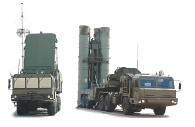
Particular emphasis is placed on replacing the Russian-origin weapons systems of the National Guard. This is a complex and high-cost undertaking, estimated at €7–9 billion. If not incorporated into a coherent, long-term plan, this process exposes Cyprus to fiscal risks, including unplanned spikes in defence spending, strains on government budgets, and the potential diversion of funds from other priorities. Operational risks also arise from procurement delays or disruptions that could impact readiness and capability.
Deterrence with realism
Cyprus cannot and need not reach military parity with its adversary. Deterrence by denial and cost is the appropriate strategy, emphasising air defence, surveillance, access denial, dispersion, and resilience—a defensive, network-centric approach valuing quality over quantity.
Within this framework, Greek military assistance, provided it is reliable and credible, acts as a multiplier of deterrent power without substituting for adequate Cypriot defence capabilities.
The strategic dilemma 2026–2036
The study presents three scenarios for 2026–2036: Minimal (1.5%–1.7% of GDP) raises strategic risk; Balanced (2% of GDP) offers credible deterrence at manageable cost; Accelerated (above 2% of GDP) allows rapid capability gains but increases fiscal risk.
- Balanced (2% of GDP) could offer credible deterrence at a manageable fiscal cost.
- Accelerated implementation (above 2% of GDP): This scenario would enable faster capability enhancement but would also entail heightened fiscal risks. These include the possibility of increased government borrowing, pressures on annual budgets, higher debt servicing costs, potential budget deficits, and restricted flexibility for other public investments if defence outlays are not matched by corresponding increases in revenue. Failure to control these risks could jeopardise economic stability or lead to cuts in non-defence areas.
The middle scenario appears the most realistic, although there have been periods—such as the 1990s—when defence spending as a percentage of GDP exceeded 5%. Ultimately, however, the final choice is a purely political decision, linked to the assessment of threats and state priorities.
Central message
The study’s key message is clear: Cyprus’s current defence funding falls short of strategic needs. The core question is not whether a strong defence is necessary, but what level of investment the economy can sustain without undermining credible deterrence.
Indecision is itself a strategic decision, with predictable consequences for Cyprus’s security and credibility.
17/12/2025